
Did you know that around 75% of job applications are rejected before a hiring manager even sees them?
The competition is tough, and most resumes never make it past the first digital scan. It’s not always because candidates aren’t qualified; it’s because their resumes aren’t designed to be ATS-friendly.
But here’s the good news: with the right approach, you can make sure your resume clears the filters and reaches the people who matter. In this blog, we’ll walk you through simple, practical steps to create an ATS-friendly resume that not only passes the system but also grabs a recruiter’s attention.
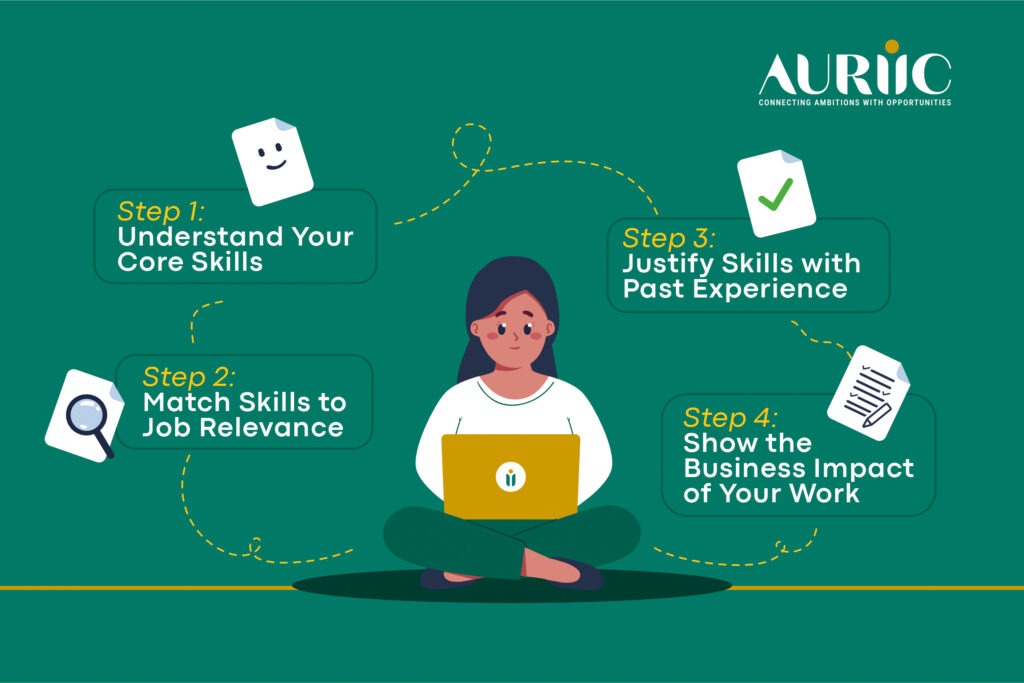
Here’s the 4-step basic approach:
Step 1: Understand Your Core Skills
The first mistake that majority of people make is throwing everything they know into their resume. Recruiters don’t want to see a list of 20 random skills.
Instead, identify your strongest skills, that are job relevant and make the application.
Ask yourself:
· What I do good at?
· How my profile is relevant here?
· Which skills are my forte?
It’s all about clarity. Once you know your core strength, your resume would be focused and professional automatically.
Step 2: Match Skills to Job Relevance
Every JD is a roadmap, it tells you exactly what the company wants. Your goal is simple: to align your skills with the requirements of the job.
For example, if the role is of a “Digital Marketing Executive” and the job description highlights SEO, Google Ads, and Analytics, you should make sure these words appear in your resume (only include skills that you possess).
This is how you “speak the language” of the ATS, with the right keywords.
Step 3: Justify Skills with Past Experiences
It’s not enough to say you’ve a skill; you need to show how you apply that to job at hand. Remember, recruiters spend most of their time in “Work Experience” section, make sure it reflects the experience that is mentioned in the JD.
So, instead of writing:
· “Good communication skills”
Try:
· “Handled client communication across 3 international projects, ensuring 100% clarity and timely deliveries.”
See the difference? One is a claim, the other is proof.
Step 4: Show the Business Impact of Your Work
Lastly, recruiters love numbers; numbers display results.
For example:
· Wrong way: “Managed social media accounts.”
· Right way: “Increased Instagram engagement by 40% in 3 months through targeted content.”
Showing the measurable impact of your work makes you appear as a valuable asset.
A resume is your first impression make sure to make it count. Research indicates that resumes incorporating the right keywords are about 40% more likely to be shortlisted by recruiters. That is why it is important to balance clean formatting with keyword optimization.
Resume Formatting for ATS
An ATS works like a search engine for resumes, scanning for keywords and formats it can read. Your resume can never be ranked as a strong match if the right keywords are missing. The same goes for formatting, multiple columns, images, or unusual fonts can confuse the ATS. Qualified candidates get overlooked for the job opportunities that can be the best for them, just because their resumes are not ATS-friendly.
Auriic Services is having one of the services as Resume Writing Services to make your resume stand-out among others. Our mission is not only to write your resume professionally but to pass through any ATS easily so that it sees the light of the day i.e. recruiters. A little information on our process is here:
ATS-Compliant Formatting
We format resumes with straightforward, system-friendly designs that avoid features like tables, images, or decorative fonts, which cause difficulties for ATS software.
Keyword Optimization
By analyzing the JDs, we spot the most relevant keywords and insert them in your resume in a grammatically correct way for higher ranking during ATS scans.
Customized Resume Writing
Every resume is made to highlight your unique skills, experience, and relevance so it makes both ATS and recruiter-friendly.
Resume Optimization
Different jobs require different skills and keywords. We help you in optimizing your resume for the job you’re applying for so that it increases your chances of getting shortlisted.
Your resume is your ticket to securing the right opportunity. But that ticket never even scans if ATS doesn’t recognize it, especially since nearly 90% of Fortune 500 companies today rely on ATS software to screen candidates.
By focusing on your core skills, matching them with the job role, backing them with real experience, and showing impact, you’re already more likely to stand out.
We hope this blog gave you a clear idea of how an ATS-friendly resume works. And if you’re ready to make your ATS friend resume, we at Auriic Services are here to help.
See you in the next blog!
